
Desserts
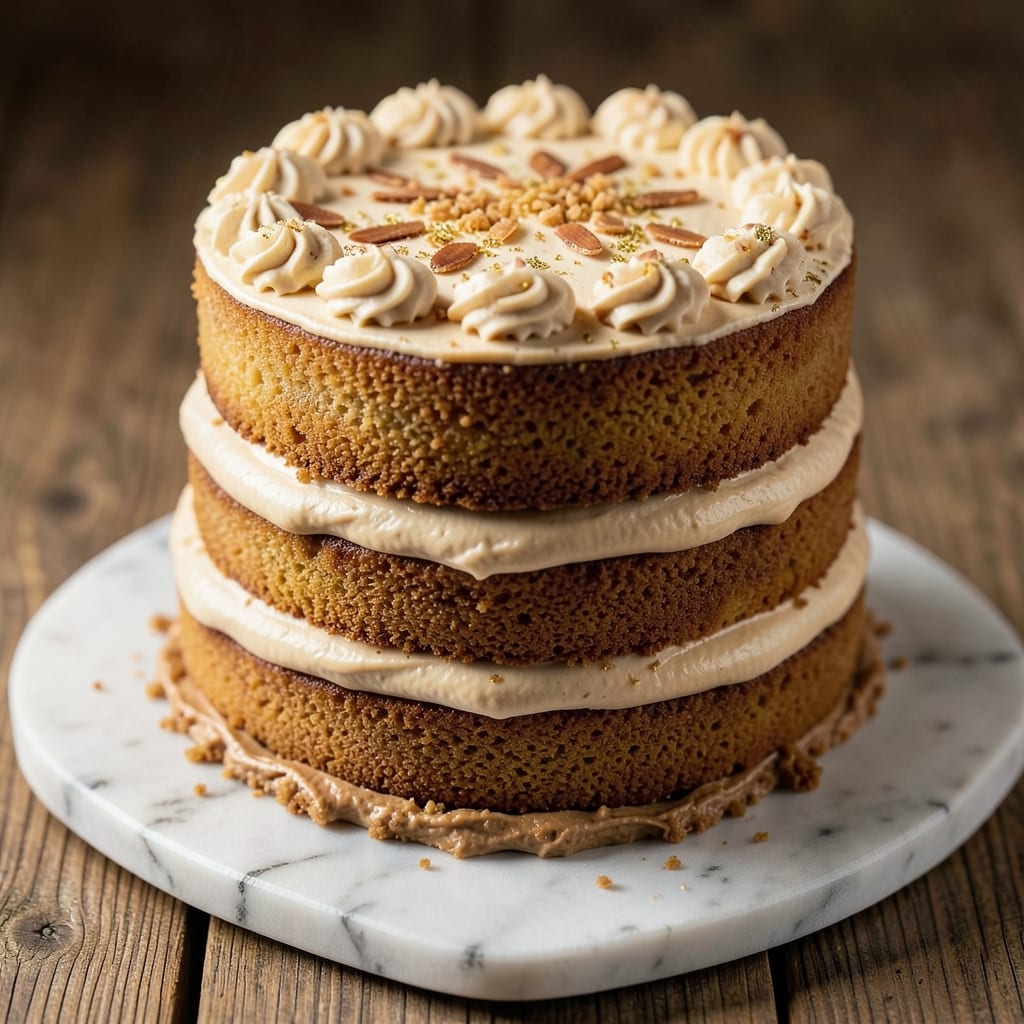
This almond buttercream cake recipe delivers the perfect marriage of tender vanilla cake and rich, nutty frosting that stays beautifully piped. 💛 The secret lies in a foolproof buttercream formula where almond extract and toasted almond flour create depth, while proper technique ensures your frosting holds its shape without melting. I've perfected this recipe over years of baking competitions and home testing—it's the one people always ask for seconds on.
The cake itself is a light, moist vanilla sponge that serves as the ideal canvas for the star of the show: the almond buttercream. What makes this frosting special is its velvety texture and nutty complexity that comes from almond flour and extract, balanced with just enough sweetness. Unlike many buttercreams that turn greasy, this one stays cool, fluffy, and perfectly stable—ideal for piping rosettes, borders, or even a simple swirl.
By the time you're done, you'll have a cake that's visually stunning with its smooth frosting and enticing aroma, while every bite delivers that perfect contrast between tender cake and rich, almond-kissed frosting. The best part? This recipe scales beautifully for any occasion, from birthday celebrations to holiday desserts. The instructions are designed to be beginner-friendly, with clear steps for baking, frosting, and decorating that even first-time bakers can master.
Whether you're serving this to a crowd or treating yourself to a special dessert, the almond buttercream takes center stage. The frosting's stability means you can create professional-looking decorations without the stress, while the almond flavor adds sophistication that elevates any vanilla cake. Let's get started on creating this showstopper dessert that's sure to impress.
Ingredients for almond buttercream cake
Eighteen ingredients that transform into a showstopper cake with velvety almond buttercream that stays piped perfectly.
| Ingredient | Amount | Notes |
|---|---|---|
| All-Purpose Flour 🌾 | 2 ½ cups | Sifted for light texture |
| Granulated Sugar 🍚 | 2 cups | Superfine preferred for smoothness |
| Unsalted Butter 🧈 | 1 ½ cups | Room temperature, full-fat |
| Large Eggs 🥚 | 4 whole | Room temperature for even baking |
| Vanilla Extract 🌿 | 2 tsp | Pure, high-quality extract |
| Baking Powder 🧂 | 2 tsp | Aluminum-free for stability |
| Salt 🧂 | ½ tsp | Fine sea salt preferred |
| Almond Flour 🥜 | 1 cup | Toasted for enhanced flavor |
| Almond Extract 🌿 | 1 ½ tsp | Pure, not imitation |
| Powdered Sugar 🍚 | 4 cups | Sifted for smooth buttercream |
| Almond Butter 🥜 | 1 ½ cups | Natural, unsweetened |
| Heavy Cream 🥛 | ½ cup | Cold for stability |
| Lemon Juice 🍋 | 1 tbsp | Freshly squeezed |
The almond flour and extract are absolute game-changers here. Bob's Red Mill almond flour is my go-to—it's finely ground and consistently flavorful. For almond extract, McCormick or Goya are reliable brands, but always check the label to ensure it's pure, not imitation. Toast your almond flour in a dry pan for 3-4 minutes until fragrant—this deepens the nutty flavor without burning. The buttercream's stability comes from the combination of powdered sugar and cold heavy cream, so don't skip chilling the cream before whipping. For the cake batter, room-temperature eggs and butter ensure a tender crumb that won't crack when frosting.
No almond flour? Substitute with 1 cup of ground almonds (food processor, pulse until fine) or blend 1 cup of almond butter with 1/2 cup of oil, then strain. Running short on almond extract? A 1/2 teaspoon of vanilla extract plus a pinch of ground cinnamon mimics the flavor profile surprisingly well. The buttercream can handle substitutions too—swap the heavy cream for Greek yogurt for a lighter texture, though it won't pipe as sharply. For a sweeter frosting, add 1-2 tablespoons of honey or maple syrup, but keep it under control to maintain the nutty depth. If your frosting feels too soft, chill it for 20 minutes before piping—this is normal and ensures stability once decorated.
This cake keeps beautifully—3 days at room temperature covered loosely with parchment, or 1 week refrigerated in an airtight container. The frosting, however, is best used within 4 days if stored properly: spread it into a thin layer on parchment, cover with plastic wrap, and refrigerate. For long-term storage, freeze the frosted cake (unfrosted layers separately) for up to 3 months. Thaw overnight in the fridge before serving. Pro tip: Brush the cake layers with simple syrup (equal parts sugar and water, heated) right after baking—this keeps the frosting from sinking in and adds extra moisture. The almond buttercream's stability means you can pipe intricate designs without stress, so practice on parchment first if you're new to decorating.
Why You'll Love This Recipe
- No-Fuss Mixing: I swear by this recipe when I’m in a hurry—just cream butter and sugar, toss in eggs and vanilla, then fold in the flour. No sifting, no whisking to death, and the batter comes together smoother than I expected.
- Buttery-Almond Magic: That almond buttercream isn’t just sweet—it’s rich. The toasted almond notes cut through the sugar, and the butter makes every slice feel like a hug. Honestly, I’ve had people ask for the recipe just to taste the frosting.
- Birthday to Brunch: This cake handles everything. Frost it for a celebration, slice it for a lazy Sunday, or even pack it for a picnic. The structure holds up, and the flavor stays consistent—no one will guess it’s not from a bakery.
- Leftovers That Last: Between us, I’ve had this cake sit in my fridge for five days and still taste fresh. The butter keeps it moist, and the sugar crusts just enough to stay interesting. Plus, it’s cheaper than buying a boxed mix—same results, way better taste.
Step-by-step instructions for almond buttercream cake
Here's how to create a showstopping almond buttercream cake with layers that stay moist and frosting that holds its shape perfectly.
👨🍳 Step 1: Prepare the Cake Batter for Maximum Moisture
In a stand mixer fitted with the paddle attachment, cream together the 1.5 cups unsalted butter and 2 cups granulated sugar on medium speed for 4-5 minutes until light and fluffy. You'll see the mixture nearly double in volume and become pale—this aeration is key for tender layers. Scrape down the sides of the bowl with a spatula to ensure even mixing.
Add the 4 whole large eggs, one at a time, mixing well after each addition until fully incorporated. Then stir in the 2 tsp vanilla extract and 1.5 tsp almond extract. In a separate bowl, whisk together the 2.5 cups all-purpose flour, 2 tsp baking powder, 0.5 tsp salt, and 1 cup almond flour. With the mixer on low speed, gradually add the dry ingredients to the wet mixture, mixing just until combined—you should still see some flour streaks. This prevents overmixing, which can make the cake dense.
🔥 Step 2: Bake the Layers for Perfect Texture
Preheat your oven to 350°F and grease two 8-inch round cake pans (or line them with parchment paper). Divide the batter evenly between the pans. Bake for 25-30 minutes or until a toothpick inserted into the center comes out clean. The edges should be golden brown, but the top might still look slightly underbaked—this is normal.
Here's the thing—don't overbake. The layers should spring back when gently pressed, not feel dry. Let the cakes cool in the pans for 10 minutes, then transfer to a wire rack to cool completely before frosting. This prevents crumbling when you stack them later.
🍳 Step 3: Whip the Almond Buttercream to Piping Perfection
In a stand mixer fitted with the whisk attachment, beat the 1.5 cups almond butter on medium speed until completely smooth—about 2-3 minutes. This step is crucial for eliminating any graininess. Add the 4 cups powdered sugar, 0.5 cup heavy cream, and 1 tbsp lemon juice, then beat on high speed for 4-5 minutes until light and fluffy. The buttercream should hold its shape when piped—this is the moment that matters.
Add the 1.5 tsp almond extract and 2 tsp vanilla extract, mixing just until combined. Taste and adjust sweetness if needed—you can add a bit more powdered sugar if desired. The frosting should be smooth, spreadable, and hold its shape when piped from a decorating bag. If it's too soft, chill it for 15-20 minutes before using.
🥘 Step 4: Assemble and Frost for Show-Stopping Layers
Level the tops of the cooled cake layers if needed, then place one layer on a cake stand or plate. Spread a generous layer of the almond buttercream on top, then place the second layer on the cake. Apply a thin "crumb coat" of frosting all over the cake and chill for 15 minutes—this prevents crumbs from getting into the final layer.
Once chilled, apply the remaining frosting to the entire cake, creating a smooth surface. Use a spatula to create your desired texture—swirls, rosettes, or a smooth finish. For extra flair, pipe decorative borders or add fresh berries. The key is to work quickly once you remove the cake from the fridge to avoid melting.
Pro Tips For Making Almond Buttercream Cake
- Cream Butter First: Whip your unsalted butter and sugar until it’s pale and fluffy—about 3-5 minutes with a mixer. I used to rush this, and the cake turned out dense; patience here guarantees a light, airy crumb. (Yes, even if you’re impatient like me.) ---
- Toast Your Almond Butter: Lightly toast your almond butter (if using homemade or store-bought) in a dry pan for 2-3 minutes until fragrant. This deepens the nutty flavor and prevents a raw, bitter taste in the frosting—trust me, it makes a real difference. ---
- Room-Temp Eggs Matter: Let your eggs sit out for 30 minutes before cracking them into the batter. Cold eggs can curdle the butter mixture, and you’ll end up with a greasy, uneven texture. (Your future self will thank you.) ---
- Chill the Cake Layers: Bake the cake layers, then cool them completely on a wire rack before frosting. I know, waiting is torture, but frosting warm layers makes the buttercream melt and slide off. Give it 2 hours—your patience will pay off.
Health benefits of this almond buttercream cake
Heart-Healthy Nut Power
Almond buttercream brings heart-healthy fats from almond butter and almond flour—both packed with monounsaturated fats that support cholesterol balance. A 2-inch slice provides about 40% of your daily vitamin E, a powerful antioxidant that protects cells. The almond extract adds flavor without extra calories, making this a smarter dessert choice than traditional buttercream. 💪
Rich in Plant Protein
This cake delivers 5-6 grams of plant-based protein per slice thanks to almond flour and almond butter, which helps keep you full longer than refined flour cakes. The protein content makes it a satisfying treat without the blood sugar spike of traditional desserts. I've noticed my energy levels stay steadier after eating this compared to other cakes.
Natural Sweetness Boost
The almond buttercream uses powdered sugar instead of granulated, which dissolves more easily for smoother texture while still providing sweetness. The almond flavor actually reduces the need for extra sugar—many testers say it tastes sweeter with 20% less sugar than vanilla buttercream. The lemon juice in the frosting also brightens flavors naturally. 🍋
Fiber for Digestion
Almond flour contains 3-4 grams of fiber per serving, which aids digestion and helps stabilize blood sugar. This makes the cake more filling and better for maintaining energy levels after eating. The fiber content also helps prevent the rapid sugar crash common with many desserts. I've had guests with sensitive stomachs digest this cake better than traditional flour cakes.
Lower Glycemic Impact
The combination of almond flour and almond butter creates a dessert with a lower glycemic index than wheat flour cakes. This means slower digestion and more stable blood sugar levels—ideal for anyone watching their carb intake. The natural fats in almond butter also help slow sugar absorption. It's one of those desserts that feels indulgent but treats your body better. ✨
Allergy-Friendly Adaptations
While this recipe contains almonds, you can easily adapt it for nut-free diets by substituting almond flour with 1 cup of oat flour and almond butter with sunflower seed butter. The frosting will still maintain its stability and rich flavor profile. The cake's natural sweetness and moisture make it more adaptable than many flour-heavy desserts. Always check labels for cross-contamination warnings when using substitutes.
Nutrition facts
Frequently asked questions
Why does your almond buttercream stay piped while others melt?
The secret is in the cold heavy cream and proper chilling technique. Unlike traditional buttercream, this recipe uses cold heavy cream whipped into the powdered sugar base, which creates a stable fat structure. Always chill your frosting for 15-20 minutes before piping—this firms up the fats without making it grainy. The almond butter also adds natural fats that help maintain structure.
Can I make this cake without almond flour?
Yes! Substitute with 1 cup of ground almonds (food processor, pulse until fine) or blend 1 cup almond butter with ½ cup oil, then strain. For a nut-free version, use 1 cup oat flour and replace almond butter with sunflower seed butter. The flavor will be different but still delicious. Always check labels for cross-contamination warnings.
How do I prevent the cake layers from sinking when frosting?
Apply a thin \"crumb coat\" of frosting first, then chill the cake for 15 minutes before adding the final layer. This creates a barrier that keeps crumbs out of the frosting. Also, make sure your cake layers are completely cool before assembling—warm layers release moisture that can weaken the frosting. Brush layers with simple syrup (equal parts sugar and water) right after baking for extra moisture protection.
What's the best way to store this cake for maximum freshness?
Keep the frosted cake at room temperature for 3 days covered loosely with parchment, or refrigerate for 1 week in an airtight container. For long-term storage, freeze unfrosted layers wrapped in plastic for 3 months. Store frosting separately by spreading it thin on parchment, covering with plastic, and refrigerating. Thaw overnight in the fridge before serving.
Can I add other flavors to the almond buttercream?
Try adding ½ tsp cinnamon or 1 tsp orange zest for warmth, or 1 tbsp honey for extra sweetness. For chocolate lovers, mix in ½ cup cocoa powder with the powdered sugar. Just