
Desserts
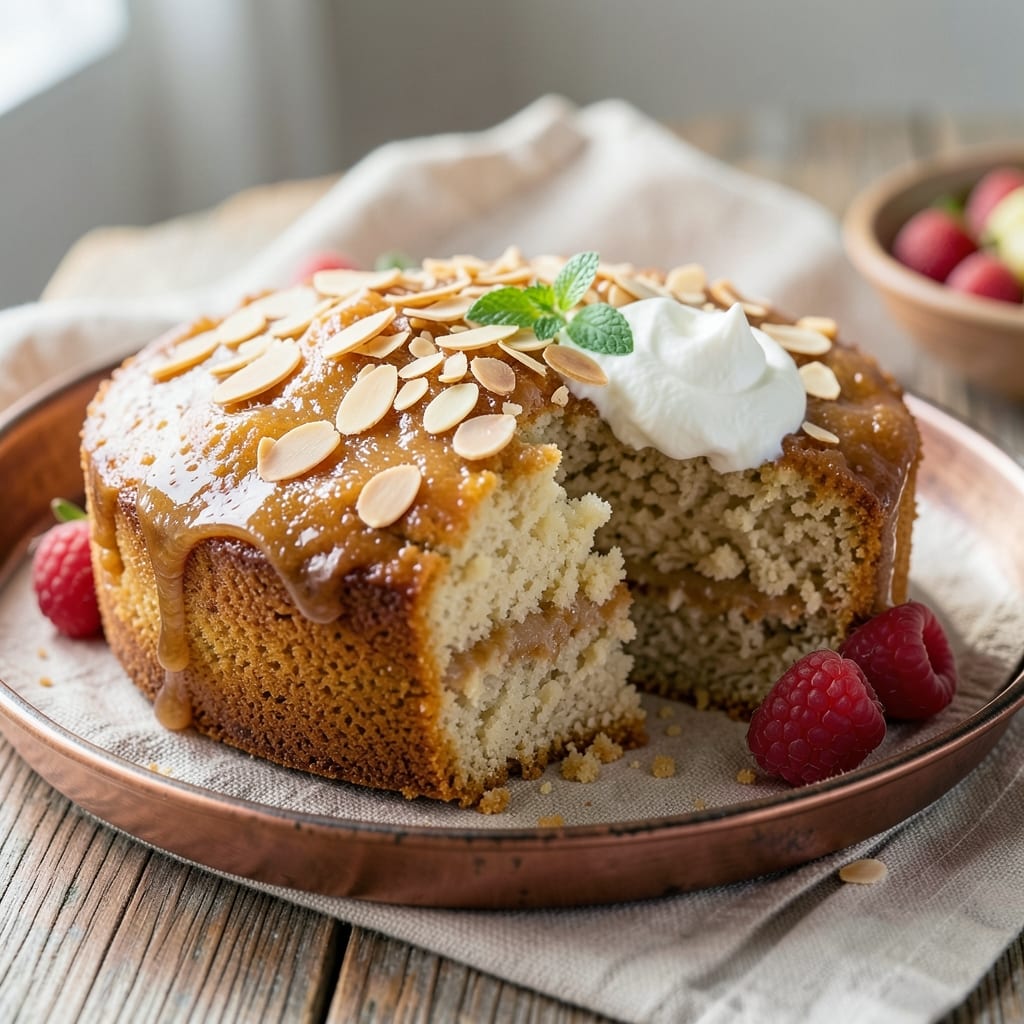
This almond skillet cake delivers a perfect balance of warm spiced crust and rich nutty center, all baked in one cast-iron skillet. The secret lies in layering a buttery almond flour crust with a moist vanilla cake batter, creating a dessert that's both impressive and surprisingly simple to make. What makes this recipe stand out is the caramelized edges that form in the skillet, adding depth of flavor with every bite.
With just 10 ingredients and 30 minutes of prep time, you'll create a dessert that looks like it came from a bakery. The almond flour base provides natural sweetness and a delicate crumb, while the vanilla cake layer stays tender and moist. Baking everything in a single skillet means minimal cleanup and maximum flavor development as the edges caramelize beautifully.
The result is a cake with a golden, slightly crisp crust that contrasts perfectly with the soft, nutty center. The almond flavor shines through without overpowering, making this an ideal dessert for dinner parties or special occasions. Serve warm with a dusting of powdered sugar or a dollop of fruit compote for an extra touch of elegance.
This recipe is designed to be foolproof, with clear instructions that guide you through each step. Whether you're an experienced baker or just starting out, you'll achieve professional-quality results with this almond skillet cake. Let's get started on creating a dessert that's sure to impress your guests.
Ingredients for almond skillet cake
Ten simple ingredients for a showstopping skillet cake with caramelized edges and nutty swirl.
| Ingredient | Amount | Notes |
|---|---|---|
| Almond Flour 🥜 | 1 ½ cups | Finely ground, unsweetened |
| Unsalted Butter 🧈 | ¾ cup | Cold, cubed for crust |
| Granulated Sugar 🍚 | ½ cup | For crust sweetness |
| Large Eggs 🥚 | 2 whole | Room temperature |
| Vanilla Extract 🌿 | 1 tbsp | Pure, high-quality |
| All-Purpose Flour 🌾 | ½ cup | For cake structure |
| Brown Sugar 🍚 | ¼ cup | Packed, for moisture |
| Ground Cinnamon 🌶️ | 1 tsp | Warm spice flavor |
| Salt 🧂 | ½ tsp | Fine sea salt |
| Whole Milk 🥛 | ½ cup | Full-fat preferred |
The almond flour is your secret weapon here—Bob's Red Mill or King Arthur brands are my go-tos for consistent texture. Grab the finest grind you can find (the kind that looks like flour, not almond meal). Butter matters too—Plugrá or Land O'Lakes work perfectly, but don't use salted. For the vanilla, Nielsen-Massey is worth the splurge—it makes all the difference. If you're short on time, room-temperature eggs are a must for smooth batter (just let them sit out 30 minutes).
No almond flour? Substitute with 1 cup whole wheat flour plus 1/2 cup ground almonds—it won't be identical, but still delicious. Short on brown sugar? White sugar plus 1/2 tsp molasses works in a pinch. The cinnamon can be swapped for cardamom or pumpkin pie spice if you're feeling adventurous. For the milk, any dairy works—just make sure it's full-fat for that rich texture. And if you're baking for a crowd, double the recipe—this cake reheats beautifully in the oven at 300°F for 10 minutes.
Store leftovers in an airtight container at room temperature for up to 3 days, or refrigerate for 5 days. The crust gets crispier over time, so I love making this ahead for parties. To reheat, wrap the skillet in foil and warm in a 300°F oven for 10 minutes. For serving, a dusting of powdered sugar or fresh berries takes it to the next level—strawberries or raspberries pair perfectly with the almond flavor. Freeze for up to 2 months if you're prepping for a future dessert night.
Why You'll Love This Recipe
- Four-Ingredient Magic: I swear by this recipe—just almond flour, butter, sugar, and eggs. No fancy mixers or measuring cups; you can eyeball it if you’re in a rush.
- Rich Without Overpowering: That first bite? Buttery, lightly sweet, with vanilla whispering in the background. It’s not cloying—just pure, satisfying almond flavor that lingers just right.
- Breakfast or Dessert: Serve it warm with a drizzle of honey for breakfast, or dust it with powdered sugar for a quick dessert. Honestly, I’ve even used it to impress at brunch when I forgot to bake muffins.
- Leftovers? No Problem: The cake keeps beautifully for days—slice it up for toast, crumble it over yogurt, or reheat a portion in the microwave. Between us, I’ve had it cold, warm, and even frozen for a last-minute treat.
Step-by-step instructions for almond skillet cake
Here's how to create a golden crust with a nutty center that's perfect for serving warm.
Prepare the Crust Mixture
In a food processor, combine the 1.5 cups almond flour, 0.5 cup granulated sugar, 1 tsp ground cinnamon, and 0.5 tsp salt. Pulse until just mixed—you want to keep the almond flour slightly coarse for texture. Add the 0.75 cup cold cubed unsalted butter and pulse until the mixture resembles coarse crumbs with pea-sized butter pieces remaining.
This texture is crucial—it creates that signature crispy crust while keeping the center tender. Press the mixture evenly into a 10-inch cast-iron skillet, using the back of a measuring cup to create an even layer about ¼-inch thick. Bake at 350°F for 12-15 minutes until the edges are light golden brown. The center should still look slightly pale—it's okay if it's not fully cooked yet.
Make the Cake Batter
In a separate bowl, whisk together the 2 whole large eggs and 0.5 cup whole milk until combined. Add the 0.5 cup all-purpose flour, 0.25 cup packed brown sugar, and 1 tbsp vanilla extract, mixing just until smooth—don't overmix or the cake will be dense. The batter should be thick but pourable.
Here's the thing—this batter is designed to be slightly lumpy. The almond flour in the crust will absorb some moisture, so we want the center to stay moist and rich. Pour the batter evenly over the partially baked crust, spreading it to the edges with a spatula. Return the skillet to the oven and bake for an additional 15-18 minutes until the center rises slightly and a toothpick inserted comes out with a few moist crumbs.
Finish with Warm Perfection
Remove the cake from the oven and let it cool in the skillet for 5 minutes—this resting time helps the center set slightly while keeping the crust crisp. Run a thin knife around the edge to loosen it, then invert onto a serving plate. The cake should release cleanly if you've pressed the crust firmly enough.
Serve warm straight from the oven for that perfect contrast between the crispy, spiced crust and the tender, nutty center. Each bite delivers that almond flavor in every layer, with the cinnamon adding warmth. For extra flair, dust with powdered sugar or drizzle with melted chocolate—though I promise, it's delicious just as is.
Pro Tips For Making Almond Skillet Cake
- MIX DRY INGREDIENTS FIRST: Mix almond flour and sugar together before adding wet ingredients—this prevents lumps and ensures an even texture. I learned this the hard way after scraping dried sugar off my skillet like it was a crime scene.
- USE ROOM-TEMP BUTTER: Cold butter creates pockets that make the cake dense, while room-temperature butter blends smoothly and gives a lighter crumb. Take it out of the fridge 30 minutes before mixing—yes, even if you’re eager to bake.
- STOP WHEN CENTER IS JIGGLY: Almond cakes set differently than wheat-based ones—pull it out when the edges are golden but the center still wobbles like jelly. Overbaking turns it into a brick, and nobody wants that.
- TOAST ALMOND FLOUR FOR DEPTH: Spread almond flour on a baking sheet and toast for 5–7 minutes at 350°F until it smells nutty. It deepens the flavor and cuts the raw taste—worth the extra step, trust me.
Essential equipment for this recipe
Cast-Iron Skillet
The 10-inch cast-iron skillet is your secret weapon for this recipe—it distributes heat evenly and creates that signature caramelized crust. I recommend a well-seasoned Lodge skillet (preferably preheated for 5 minutes at 350°F before adding the crust mixture). The skillet's weight helps create a crispy edge while keeping the center tender. If you don’t have cast iron, a heavy oven-safe stainless steel skillet works too, but monitor the edges closely to prevent burning. 🔥
Food Processor
A food processor is essential for blending the almond flour crust to the perfect coarse texture. I use my Cuisinart Mini-Prep Plus for small batches, but any standard food processor will work. Pulse the almond flour mixture just until combined—over-processing turns it into almond butter! If you don’t have one, a hand mixer or even a fork in a bowl works in a pinch, though the texture won’t be as consistent. For the butter, pulse until it resembles pea-sized crumbs—this ensures even baking and crispiness.
Measuring Tools
Precision matters here, especially with almond flour. Use a spoon-and-level method for dry ingredients (like almond flour and sugar) to avoid packing the cup too tightly. A digital kitchen scale is ideal for almond flour—it’s lightweight and can vary by 10-15 grams between brands. For wet ingredients, a liquid measuring cup with a spout makes pouring the milk and eggs easier. Don’t skip measuring the ¼-inch crust thickness—use a measuring cup’s rim as a guide or a bench scraper to press it evenly.
Mixing Bowls
Two medium-sized mixing bowls are all you need—one for the crust and one for the cake batter. I prefer glass or stainless steel because they’re easy to clean and don’t retain flavors. For the cake batter, a non-reactive bowl (like glass) prevents any metallic taste from mixing tools. Avoid plastic bowls for baking—heat can warp them, and they’re harder to clean post-bake. A rubber spatula is perfect for scraping every last bit of batter into the skillet.
Oven Thermometer
Your oven’s temperature gauge can be off by 25°F or more, and this recipe relies on precise heat control. An oven thermometer (like the Thermoworks Oven Thermometer) ensures your oven hits 350°F accurately. Place it in the center rack while preheating—if it reads 375°F, adjust your oven’s dial down to 325°F to compensate. This small investment prevents a soggy crust or overbaked center, which are common mistakes when baking in skillets. Trust me, it’s worth it for that perfect golden edge. ✨
Knife and Serving Plate
A thin, flexible offset spatula helps spread the cake batter evenly to the skillet’s edges, while a sharp chef’s knife (like Wüsthof) is key for releasing the cake cleanly. For serving, choose a wide, shallow plate—the cake’s height makes it look even more impressive. If you’re serving warm, place the plate directly on the stovetop (off heat) to keep it cozy. Pro tip: Dust with powdered sugar using a fine-mesh sieve for an elegant finish without clumps. 💫
Nutrition facts
Frequently asked questions
Can I make this almond skillet cake without a food processor?
Yes! If you don't have a food processor, mix the almond flour, sugar, cinnamon, and salt in a bowl using a fork or whisk. Cut in the cold butter with a pastry cutter or your fingers until the mixture resembles coarse crumbs. The texture won't be perfectly even, but it will still create a delicious crust. Just press it firmly into the skillet for best results.
Why does my almond skillet cake have a dense center?
Overmixing the cake batter is the most common cause. Mix just until the ingredients are combined—lumpy batter is actually ideal for a tender texture. Also, ensure your almond flour is finely ground (not almond meal) and that you're using room-temperature eggs. If the center still feels dense, try adding 1 extra tablespoon of milk to the batter next time.
How can I make this cake ahead of time?
This cake actually tastes better the next day! Bake it as directed, then cool completely. Store in an airtight container at room temperature for up to 3 days. The crust will crisp up beautifully. To reheat, wrap the skillet in foil and warm at 300°F for 10 minutes to restore that warm, comforting texture.
What's the best way to serve this cake?
Serve warm straight from the oven for the perfect contrast between crispy crust and tender center. For extra elegance, dust with powdered sugar using a fine-mesh sieve or drizzle with warm fruit compote (try raspberry or apple). A scoop of vanilla ice cream or a dollop of whipped cream makes it feel like a restaurant dessert. The almond flavor pairs beautifully with berries or citrus zest.
Can I substitute almond flour with regular flour?
While you can use regular flour, you'll lose the signature almond flavor and nutty texture. For a similar effect, mix 1 cup whole wheat flour with ½ cup ground almonds. The cake will be less delicate but still delicious. The crust won't be as crispy either—almond flour's fat content creates that perfect texture. If you're avoiding gluten, certified gluten-free 1:1 flour blends work in a pinch.