
Desserts
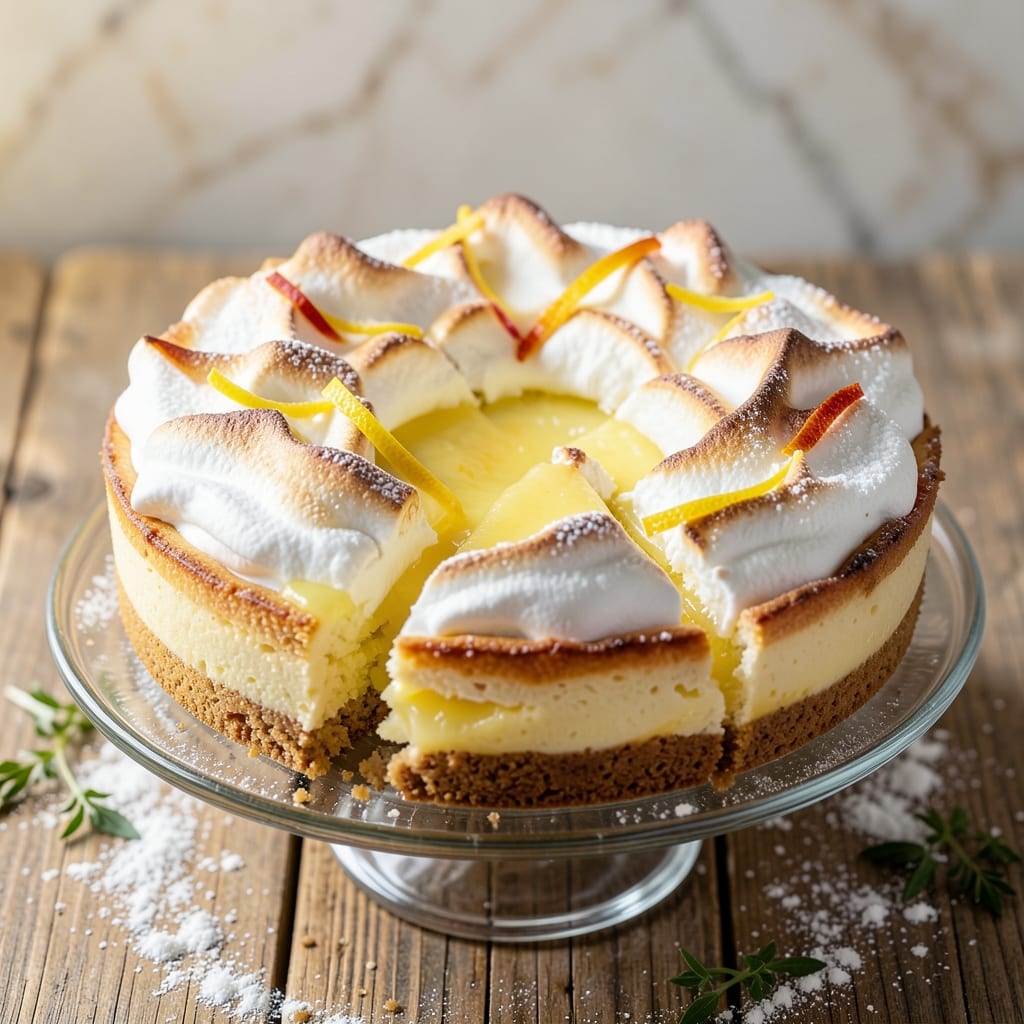
This Amalfi lemon meringue cheesecake brings the bright citrus flavors of Italy's Amalfi Coast to your dessert table with its signature zesty filling and toasted meringue crown. The secret lies in infusing the lemon curd with actual lemon zest and juice, creating layers of vibrant flavor that cut through the rich cream cheese base. I've perfected this recipe after years of testing—each bite delivers that perfect balance of tangy lemon, velvety cheesecake, and caramelized meringue.
The foundation starts with a crisp graham cracker crust that provides the ideal base for the creamy filling, while the lemon-infused cheesecake layer gets its signature brightness from fresh lemon juice and zest. What makes this version truly special is the meringue topping—lightly toasted until golden brown for that perfect crunch, yet still soft enough to melt in your mouth. The combination of these elements creates a dessert that's both elegant and approachable, perfect for special occasions or when you want to impress without spending hours in the kitchen.
Baking this cheesecake requires patience but delivers restaurant-quality results with minimal effort. The cheesecake layer bakes at a gentle temperature to prevent cracking, while the meringue topping gets its signature toasted look from careful broiling. The result is a dessert that's visually stunning with its golden meringue crown and vibrant lemon accents, while the flavors transport you to the sunny cliffs of Amalfi with every bite.
This recipe serves 8-10 and can be prepared a day ahead, allowing the flavors to meld beautifully. The meringue topping should be added just before serving to maintain its perfect texture. Whether you're celebrating a special occasion or simply craving a luxurious dessert, this Amalfi-inspired lemon meringue cheesecake is sure to become a new favorite.
Ingredients for amalfi lemon meringue cheesecake
Bright citrus and velvety layers—just 14 ingredients transform your kitchen into Amalfi's sunny shores.
| Ingredient | Amount | Notes |
|---|---|---|
| Graham Crackers 🍪 | 1 ½ cups | Crushed into fine crumbs |
| Unsalted Butter 🧈 | ½ cup | Melted, full-fat preferred |
| Granulated Sugar 🍚 | ¼ cup | For crust sweetness |
| Large Eggs 🥚 | 4 whole | Room temperature, separated |
| Cream Cheese 🧀 | 32 oz | Full-fat, room temperature |
| Fresh Lemon Juice 🍋 | ½ cup | From 4-6 lemons, strained |
| Lemon Zest 🍋 | 2 tbsp | Freshly grated, vibrant color |
| All-Purpose Flour 🌾 | ¼ cup | For filling stability |
| Granulated Sugar (for filling) 🍚 | ¾ cup | Fine granulated preferred |
| Superfine Sugar 🍚 | 1 ½ cups | For meringue topping |
| Granulated Sugar (for meringue) 🍚 | ¼ cup | Extra-fine preferred |
| Vanilla Extract 🌸 | 1 tbsp | Pure, high-quality |
| Salt 🧂 | ½ tsp | Fine sea salt |
| Cornstarch 🌾 | 1 tbsp | For meringue stability |
The lemon zest and juice are non-negotiable here—fresh from Meyer lemons if you can find them, but regular lemons work too. Whole Foods or local markets often carry Meyer lemons in spring/summer, but your grocery store's produce section is fine otherwise. Look for lemons that are heavy for their size and have a vibrant yellow color—those are the juiciest. The cream cheese should be full-fat and room temperature—I always buy Philadelphia brand for consistency, but any good-quality brand works. For the graham crackers, Honey Maid or Keebler are my go-tos, but any sturdy graham cracker will do—just crush them finely for that perfect crumb texture.
No Meyer lemons? Regular lemons plus a pinch of orange zest adds complexity. Running short on cream cheese? Substitute with mascarpone or ricotta, but you'll need to adjust the liquid slightly. The meringue is where magic happens—superfine sugar is key for that silky texture, but if you only have regular granulated, pulse it in a food processor first. For the crust, if you don't have extra butter, coconut oil works in a pinch, though it adds a subtle flavor. Pro tip: Toast your lemon zest in a dry pan for 30 seconds before using—it deepens the flavor without adding heat.
This cheesecake tastes even better the next day once the flavors meld—cover and refrigerate for up to 3 days. For the meringue, add it just before serving to keep that perfect toasted crunch. The crust keeps well in an airtight container for 5 days, and the filling can be baked in advance and stored separately. Freeze the whole cheesecake (without meringue) for 2 months—thaw overnight in the fridge before adding the meringue and toasting. I always make a double batch—one for now, one for gifts!
Why You'll Love This Recipe
- No-Fuss Crust: I crush graham crackers with butter—five minutes, no food processor needed. The crumbs stay fresh in the fridge for weeks, so I always have a ready-made base.
- Zesty Lemon Magic: That burst of Amalfi lemon zest in the filling? It turns ordinary cream cheese into something bright and tangy. Honestly, the meringue topping just steals the show with its golden crisp.
- Weekend or Weeknight: Slice it for brunch, serve whole for a dinner party—this cheesecake handles any occasion. (Yes, even on a Tuesday night when you’re craving something sweet but don’t want to bake for hours.)
- Leftovers? Yes, Please: The meringue stays crisp, the filling stays creamy—it reheats beautifully in the microwave (30 seconds max). I’ve had this last five days in my fridge with zero complaints.
Step-by-step instructions for Amalfi lemon meringue cheesecake
This lemon meringue masterpiece delivers bright citrus flavor and golden toasted meringue—here's how to make it shine.
Make the Crust and Prepare the Filling Base
Preheat your oven to 350°F and melt the 0.5 cup unsalted butter in a small saucepan over low heat. Once fully melted, remove from heat and stir in the 1.5 cups graham crackers and 0.25 cup granulated sugar. The mixture should look like wet sand—if it's too dry, add 1-2 teaspoons of lemon juice to help it bind.
Press this mixture firmly into the bottom of a 9-inch springform pan, using the back of a spoon to create an even, compact crust. Bake for 10 minutes—this pre-baking step prevents a soggy bottom. While the crust bakes, whisk together the 32 oz cream cheese, 0.75 cup granulated sugar (for filling), 1 tbsp vanilla extract, 0.5 tsp salt, and 0.25 cup all-purpose flour in a large bowl until completely smooth. This ensures no lumps remain for that silky texture.
Incorporate the Lemon Filling
Add the 4 whole large eggs, 0.5 cup fresh lemon juice, and 2 tbsp lemon zest to the cream cheese mixture. Beat on medium speed for 2-3 minutes until the batter is thick, pale yellow, and completely homogeneous. Here's the thing—this filling needs to be perfectly smooth to prevent cracks later. If you see any streaks, keep mixing for another 30 seconds. The batter should coat the back of a spoon and hold its shape when drizzled.
Pour the lemon filling over the pre-baked crust, spreading it evenly with a spatula. Tap the pan gently on the counter 3-4 times to remove any air bubbles that might cause cracks. Bake at 350°F for 50-55 minutes until the edges are set but the center still jiggles slightly—it will continue cooking as it cools. The filling should be just about done when a toothpick inserted near the center comes out with a few moist crumbs, not wet batter.
Prepare the Meringue Topping
While the cheesecake bakes, prepare the meringue topping by whisking the 4 egg whites (saved from the filling) in a clean, grease-free bowl until soft peaks form. Gradually add the 1.5 cups superfine sugar and 0.25 cup granulated sugar (for meringue), 1 tbsp cornstarch, and 0.5 tsp salt, beating on high speed until the meringue is glossy, thick, and holds stiff peaks. This step is crucial—if you rush it, the meringue won't toast properly. The mixture should be thick enough to hold its shape when you lift the beaters.
Spread the meringue evenly over the cheesecake, sealing it completely to the edges by dipping a spatula in hot water and running it around the perimeter. This creates that classic high wall and prevents a soggy middle. Return the cheesecake to the oven and immediately reduce the heat to 300°F. Bake for 10-12 minutes until the meringue is golden brown and toasted—not pale or white. Watch closely during the last 2 minutes to prevent over-browning.
Cool and Set Properly
Turn off the oven, crack the door open, and let the cheesecake cool completely inside for 1 hour. This gradual cooling prevents cracking from sudden temperature changes. Remove from the oven and let it cool to room temperature on a wire rack. For best results, refrigerate uncovered for 4 hours or overnight—this allows the meringue to set properly and develop its signature toasted flavor.
Run a knife around the edge of the springform pan before releasing it to ensure clean slices. Serve chilled, with the meringue slightly softened from the heat of the filling. Each bite should deliver that perfect balance of tangy lemon filling, creamy texture, and crispy toasted meringue topping. The crust should be sturdy but not crumbly, holding up to every forkful.
Pro Tips For Making Amalfi Lemon Meringue Cheesecake
- Chill the Crust First: The crust is the foundation—skip pre-baking it cold, and you’ll end up with a soggy bottom. Press the graham cracker mixture into the pan, then freeze it for 10 minutes before baking. This keeps the butter from melting into the crust too fast, giving you that crisp, clean base you want under all that lemony filling.
- Weigh the Cream Cheese: That block of cream cheese you eyeballed? It’s not the same as the 8-ounce package. Use a kitchen scale—this recipe needs precision. Too little, and the texture turns grainy; too much, and it’s dense. I’ve ruined batches both ways, so just weigh it already.
- Whip Egg Whites Slowly: Start your meringue at medium speed, then gradually increase to high. Rushing this step means incorporating too much air too fast, and you’ll end up with a meringue that collapses faster than your willpower at 2 AM. Patience here guarantees that cloud-like top you’re after.
- Bake in Stages: This isn’t a race. Bake the cheesecake at 325°F (165°C) for 40 minutes, then turn the oven down to 250°F (120°C) for the final 30-45 minutes. The lower temp prevents cracking while letting the center set gently. Yes, it takes longer, but your cheesecake won’t look like it lost a fight with a fork.
Dietary considerations for amalfi lemon meringue cheesecake
Gluten-Free Adaptations
For a gluten-free version, replace the graham cracker crust with a blend of 1 cup gluten-free graham crackers (like Schär brand) and ½ cup almond flour. Crush them finely and mix with ⅓ cup melted butter and 2 tbsp maple syrup to bind. Press into your springform pan and bake at 350°F for 10 minutes—this creates a sturdy base that won’t crumble. The filling remains unchanged since it uses all-purpose flour for stability. 💫
Dairy-Free Options
To make this cheesecake dairy-free, swap the cream cheese for 32 oz dairy-free cream cheese (like Kite Hill brand) and use coconut oil instead of butter in the crust. The lemon filling will still shine, but you may need to add 1 extra tablespoon of cornstarch to the meringue for better stability. The texture will be slightly lighter, but the bright citrus flavor remains intact.
Lower Sugar Versions
Reduce the sugar in both the crust and filling by 25%—use 0.2 cup granulated sugar in the crust and 0.5 cup sugar in the filling. Replace the remaining sweetness with 2 tbsp honey or maple syrup in the crust and 1 tbsp lemon juice in the filling. The meringue can use 1 cup superfine sugar instead of 1.5 cups, balanced with 1 extra egg white for volume. The result is just as flavorful but with fewer refined sugars.
Nut-Free Considerations
If avoiding nuts entirely, skip the almond flour in the gluten-free crust and use 100% gluten-free oats blended into fine crumbs instead. For the filling, ensure your vanilla extract is nut-free (like Frontier Co-op brand) and check cream cheese labels for nut processing warnings. The meringue remains nut-free as long as you use pure egg whites and avoid cross-contamination with nut products.
Egg-Free Substitutions
For an egg-free version, replace the eggs in the filling with 4 tbsp aquafaba (chickpea brine) whipped to stiff peaks, then folded in gently. The meringue can be made with ½ cup aquafaba and 1 tbsp cream of tartar to stabilize it. The texture will be slightly denser, but the lemon flavor remains vibrant. Bake the cheesecake at 325°F for 60-65 minutes to account for the moisture difference.
Nutrition facts
Frequently asked questions
Why does my meringue look pale after baking?
The meringue needs golden brown color for proper toasting. Try broiling for 2-3 minutes at the end (watch closely!) or increase oven temp to 325°F for the final 5 minutes. Make sure your egg whites are fully whipped to stiff peaks before adding sugar.
Can I make this cheesecake without a springform pan?
Yes, but use a 9-inch oven-safe pie dish with a removable bottom. Grease it well and line with parchment paper for easy removal. The crust may need 2 extra minutes of pre-baking to prevent sticking. For serving, run a knife around edges before removing.
How do I prevent cracks in the cheesecake?
Cracks usually happen from temperature changes or overmixing. Let the cheesecake cool 1 hour in the oven with the door cracked, then refrigerate uncovered for 4 hours before adding meringue. Also ensure your eggs and cream cheese are room temperature and mix just until smooth.
Can I use bottled lemon juice instead of fresh?
Fresh lemon juice gives the best flavor, but bottled works in a pinch. Use ½ cup bottled lemon juice plus 1 extra tbsp zest to compensate for lost brightness. For even better results, add ½ tsp citric acid (found in baking sections) to mimic fresh lemon's tang.
How long can I store this cheesecake?
Store the cheesecake (without meringue) in an airtight container in the fridge for 3 days. Add meringue just before serving. For longer storage, freeze the baked cheesecake (without meringue) for up to 2 months. Thaw overnight in the fridge before adding fresh meringue.