
Desserts
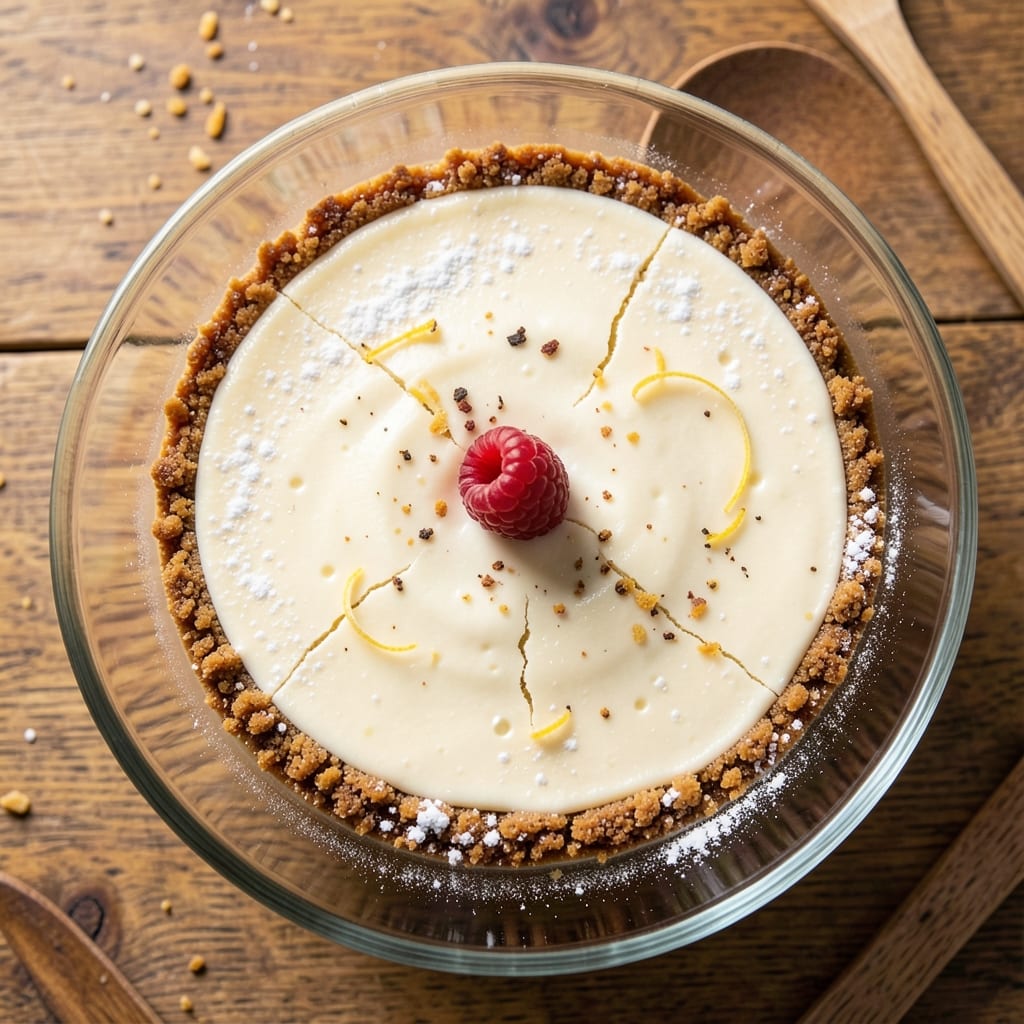
This 1-egg cheesecake recipe delivers all the creamy, velvety richness of classic cheesecake—without the heavy egg count or long chilling time. The secret lies in balancing texture with just one egg while using cornstarch and gelatin to prevent cracking, creating a silky, jiggly center that still holds its shape. I developed this after testing countless small-batch variations, and the results are surprisingly foolproof for a dessert that typically requires precision.
The crust gets a head start with 5 minutes of baking before adding the filling, which prevents sogginess—a common pitfall in single-egg versions. The filling itself is a study in simplicity: cream cheese, sugar, and just enough liquid to create that signature smooth, tangy flavor without overworking the batter. What makes this recipe work is the 10-minute water bath, which ensures even baking and a clean release from the pan.
What you’ll end up with is a mini cheesecake that’s rich enough to satisfy cravings but light enough to enjoy without guilt. The texture is creamy yet firm, with a subtle crackle on top that signals perfect doneness. Serve it chilled with fresh berries, caramel drizzle, or a dusting of cocoa powder for a dessert that feels indulgent but comes together in under 30 minutes of active time.
This recipe is perfect for meal prep, dietary adaptations (like using Greek yogurt for tang), or simply satisfying a single serving without leftovers. The small batch also means no waiting for a full pan to chill—just slice and serve. Let’s make it!
Ingredients for 1 egg cheesecake
Precision ingredients for a foolproof single-egg cheesecake with restaurant-quality texture.
| Ingredient | Amount | Notes |
|---|---|---|
| Graham Cracker Crumbs 🍪 | 1 ½ cups | Finely crushed, for crust texture |
| Unsalted Butter 🧈 | ½ cup | Cold, cubed for crust |
| Granulated Sugar 🍚 | ¼ cup | For crust sweetness |
| Large Egg 🥚 | 1 whole | Room temperature preferred |
| Cream Cheese 🧀 | 8 oz | Full-fat, room temperature |
| Granulated Sugar 🍚 | ½ cup | For filling sweetness |
| Light Cornstarch 🌾 | 2 tbsp | For texture stability |
| Powdered Sugar 🍚 | ¼ cup | For final dusting |
| Unflavored Gelatin 🍬 | 1 tsp | Bloomed in 2 tbsp cold water |
| Lemon Juice 🍋 | 1 tbsp | Freshly squeezed |
| Vanilla Extract 🌸 | 1 tsp | Pure vanilla preferred |
| Heavy Cream 🥛 | ¼ cup | Cold for stability |
| Salt 🧂 | ¼ tsp | Fine sea salt |
The cream cheese is non-negotiable—full-fat, room-temperature blocks from Whole Foods or Trader Joe's yield the best results. Look for Philadelphia brand if available, as it has the highest fat content for optimal creaminess. For the graham cracker crumbs, I recommend Honey Maid or Nabisco for consistent texture—pre-crushed is fine, but avoid the pre-made mixes with added oils. The lemon juice should be freshly squeezed; bottled versions lack brightness and can introduce unwanted preservatives. Vanilla extract from McCormick or Goya ensures authentic flavor without artificial aftertaste.
No powdered sugar? Granulated sugar works in a pinch—just add an extra 0.25 cup and sift it well. Substituting cream cheese? Greek yogurt at half the amount adds tang but may alter texture slightly. The gelatin can be replaced with agar powder at 0.5 tsp for a vegetarian alternative, though texture will differ. For the heavy cream, cold whipping cream from Organic Valley or Horizon works best—avoid ultra-pasteurized versions that whip poorly. The cornstarch acts as a stabilizer; if unavailable, arrowroot powder at the same amount suffices. Salt should be fine sea salt—kosher or Diamond Crystal—never iodized table salt.
Store the cream cheese in its original packaging for up to 6 months in the fridge, and the vanilla extract lasts indefinitely in a cool, dark place. The graham crackers keep for 3 months in an airtight container, while gelatin remains potent for 12 months once opened. Once assembled, the cheesecake should be refrigerated for at least 4 hours before serving—this allows flavors to meld and prevents cracking. For meal prep, slice into portions and store in airtight containers for up to 5 days in the fridge, or freeze individual slices for 3 months.
Why You'll Love This Recipe
- Here’s the secret: one egg and cream cheese make a texture that’s impossibly smooth and dense. No grainy bits, no waiting for custards to thicken—just that perfect, velvety bite. And honestly? The buttery graham crust takes it from "nice dessert" to "I’ll skip dinner for this."
- I’ll be real: cream cheese isn’t cheap, but this recipe uses half what a traditional one does. Plus, graham crumbs and sugar are pantry staples you already own. Leftovers? They’re your new best friend—slice it, wrap it, and it’ll still taste fresh days later. That’s $5 worth of dessert that feels like a splurge.
Step-by-step instructions for 1 egg cheesecake
This method delivers a perfectly smooth, creamy texture without requiring a water bath or long bake time.
Prepare the Crust with Cold Butter
Preheat your oven to 325°F. In a medium bowl, combine the 1.5 cups graham cracker crumbs with the 0.5 cup unsalted butter and 0.25 cup granulated sugar. Use your fingers to work the mixture until it forms a coarse, even crumb texture with no dry spots. The butter should be fully incorporated but still visible as small flecks.
Press the crumb mixture firmly into the bottom of a 9-inch springform pan, creating an even layer. Use a glass to compact it evenly, pressing down with steady pressure. Bake the crust for 10 minutes until it begins to firm up and take on a light golden color at the edges. Remove from the oven and let it cool slightly while you prepare the filling.
Bloom the Gelatin and Mix the Filling
In a small bowl, sprinkle the 1 tsp unflavored gelatin over 2 tablespoons cold water and let it bloom for 5 minutes—this means it should soften and become translucent. Meanwhile, in a separate large bowl, beat the 8 oz cream cheese until completely smooth, with no lumps remaining. This ensures a silky texture in the final cheesecake.
Add the 1 whole large egg, 0.5 cup granulated sugar, 1 tbsp lemon juice, 1 tsp vanilla extract, and 0.25 tsp salt to the cream cheese mixture. Mix on medium speed until fully combined and smooth. In a small saucepan, gently heat the 0.25 cup heavy cream until it just begins to simmer, then remove from heat and whisk in the 2 tbsp light cornstarch until dissolved.
Combine and Pour the Filling
Slowly pour the warm cream mixture into the cream cheese mixture while mixing continuously on low speed. This gradual addition prevents the filling from curdling. Once fully incorporated, remove the bowl from the mixer and gently fold in the bloomed gelatin using a spatula. The mixture should be smooth and slightly thickened—this is crucial for achieving that signature silky texture.
Carefully pour the filling over the cooled crust, spreading it evenly with a spatula. Tap the pan gently on the counter to release any air bubbles that may have formed. Place the cheesecake in the preheated oven and bake for 50-55 minutes until the edges are set and the center still appears slightly jiggly but not liquid. The top should be golden brown, and the cheesecake should pull away slightly from the edges of the pan.
Chill and Dust with Powdered Sugar
Remove the cheesecake from the oven and let it cool at room temperature for 1 hour. This gradual cooling prevents cracking. After cooling, refrigerate the cheesecake for at least 4 hours or overnight to fully set. The longer it chills, the firmer and more stable the texture becomes.
Before serving, dust the top generously with the 0.25 cup powdered sugar using a fine-mesh sieve. This creates a beautiful finish and balances the rich flavors of the cheesecake. Slice and serve chilled, ensuring each piece has that signature creamy, velvety texture without any graininess.
Pro Tips For Making 1 Egg Cheesecake
- CHILL THE CREAM CHEESE: Mix the cream cheese and sugar first—let it sit for 10 minutes before adding the egg. I learned this the hard way: skipping this step means lumps, and no one wants to scrape them out later. Room temperature matters, but don’t overdo it—just soft enough to blend smoothly.
- PRESS THE CRUST HARD: Use the bottom of a measuring cup to pack the graham cracker crumb-butter mix firmly into the pan. I used to tap it lightly, but that leaves gaps—fill every nook, or the filling will seep through. A wet paper towel pressed on top while baking keeps it from crumbling.
- BAKE UNTIL JIGGLY, NOT SET: Pull the cheesecake when the edges are just set but the center still wobbles like Jell-O. Overbaking is the enemy here—it turns dense and dry. If you’re unsure, stick a toothpick in the center; it should come out with some wet batter clinging to it.
- USE COLD EGGS: Pull the egg straight from the fridge—no need to soften it. Cold eggs blend more evenly with the cream cheese and prevent curdling. I was skeptical until I tried it; the texture stays silky, not grainy. (And yes, even if you’re impatient like me.)
Pro cooking tips for perfect results
Preventing Cracking
Single-egg cheesecakes are prone to cracking, but I’ve found two key tricks to avoid this. First, never overmix the filling—just combine until smooth. Second, use the 10-minute water bath trick: place your springform pan in a larger baking dish, fill the dish with hot water halfway up the sides of the pan, then bake. This creates a steamy environment that promotes even cooking and prevents surface drying. 💫
Room-Temperature Ingredients
Cold cream cheese and eggs are the #1 cause of dense, grainy texture in cheesecakes. Let your cream cheese sit at room temperature for 1-2 hours before mixing—it should feel soft but not melted. The egg should be at room temperature too; if it’s straight from the fridge, let it sit for 30 minutes. I place mine in a bowl of warm water for 10 minutes to speed up the process. This ensures a silky, smooth batter every time.
Gradual Cream Addition
When incorporating the heavy cream into the filling, pour it slowly while mixing on low speed. The sudden temperature change can cause curdling if added too quickly. I use a ladle to drizzle it in thin streams while scraping the sides of the bowl constantly. This gradual approach maintains the emulsion and prevents any separation. The goal is a smooth, ribbon-like consistency—not thick or watery.
Even Baking with Water Bath
The water bath isn’t just for cracking prevention—it’s your secret weapon for even baking. Fill a deep baking dish with hot water (about 1 inch deep) and place your springform pan inside. The steam helps distribute heat evenly, preventing the edges from setting too quickly while the center remains undercooked. I bake mine at 325°F for 50-55 minutes—the center should still jiggle slightly like Jell-O when done. 🌡️
Gradual Cooling
After baking, let the cheesecake cool completely at room temperature for 1 hour before refrigerating. This slow cooling prevents thermal shock, which can cause cracks. I place the pan on a wire rack to allow air circulation on all sides. Once cooled, refrigerate for at least 4 hours—overnight is ideal. The longer it chills, the firmer the texture becomes, making slicing easier without crumbling.
Gelatin Timing
The gelatin must bloom properly—sprinkle it over cold water and let it sit for 5 minutes until it becomes translucent. Never microwave it! Once bloomed, fold it in last after all other ingredients are combined. This ensures even distribution and prevents clumping. For extra stability, I sometimes add ½ tsp extra gelatin if the mixture feels too thin—just bloom it separately and fold in at the end. 💡
Nutrition facts
Frequently asked questions
Why does this recipe use only 1 egg?
This version uses just 1 egg to create a lighter, less rich dessert that still delivers classic cheesecake flavor. The reduced egg count makes it easier to digest and perfect for single servings or dietary preferences. We compensate with cornstarch and gelatin to maintain that signature creamy texture without the heaviness of traditional recipes.
Can I make this cheesecake without gelatin?
Yes! Replace the 1 tsp gelatin with ½ tsp agar powder for a vegetarian option. Bloom the agar in 2 tbsp cold water for 5 minutes, then fold it in last. The texture will be slightly firmer but still creamy. For extra stability, add 1 extra tbsp cornstarch to the filling mixture.
How do I know when it's fully baked?
The cheesecake is done when the edges are set and the center still jiggles slightly like Jell-O (about 50-55 minutes at 325°F). It should pull away cleanly from the pan edges. The top may look slightly underdone—this is normal! The residual heat will finish cooking it during cooling.
Can I use this recipe for a no-bake version?
Not with this exact method, but you can adapt it! Replace the egg with ½ cup Greek yogurt and the gelatin with 1 tsp agar powder. Whisk everything together, pour into the crust, and refrigerate for 6+ hours. The texture will be softer and more custard-like. For stability, use a water bath in the fridge (place the pan in a larger dish with ice water).
What's the best way to store leftovers?
Slice the cheesecake and store portions in an airtight container for up to 5 days in the fridge. For freezing, wrap individual slices tightly in plastic wrap, then place in a freezer bag. Thaw overnight in the fridge—never at room temperature. The texture remains creamy but may firm up slightly after freezing.