
Desserts
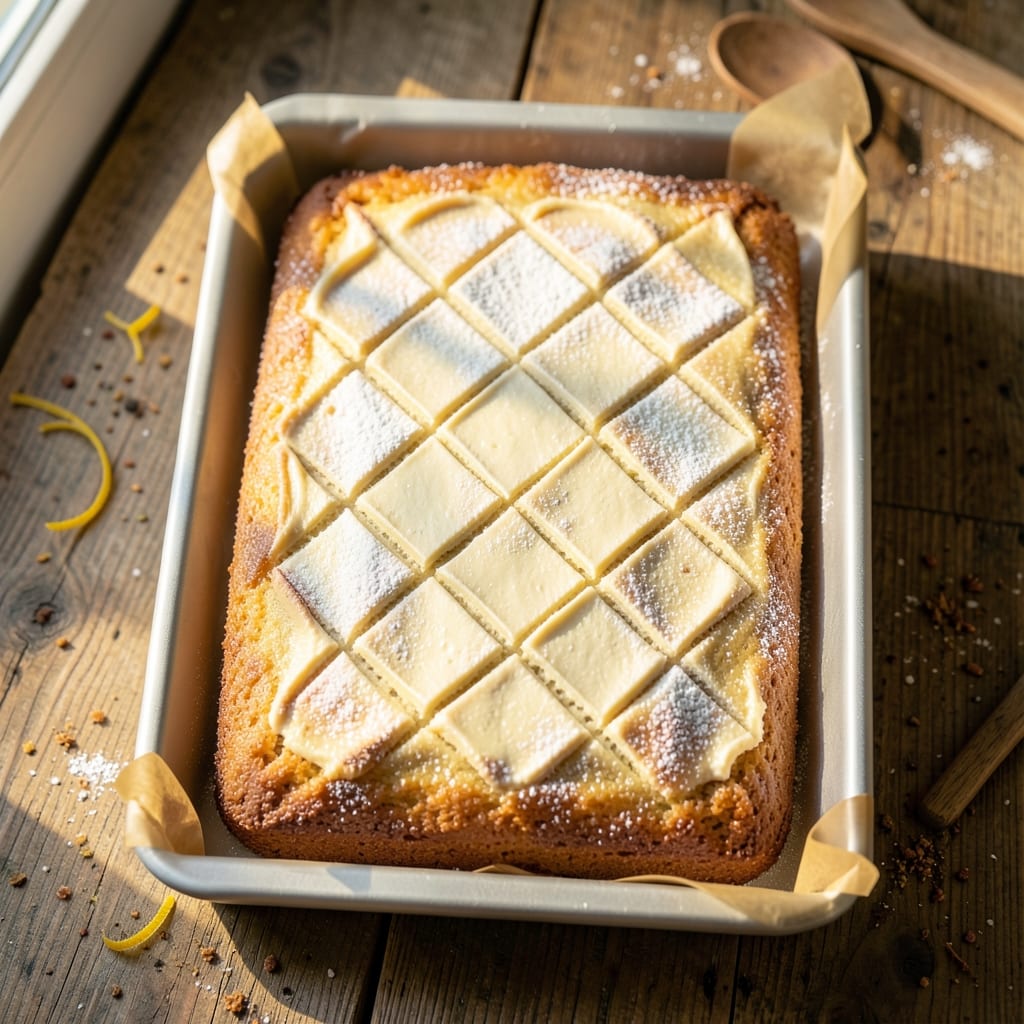
A 12x18 sheet cake is the ultimate solution for feeding crowds with perfect layers of vanilla bliss—no crumbs, no stress, just professional-quality results. The secret lies in precise measurements and gentle folding to create a tender, even crumb that bakes up golden and moist without drying out. I've perfected this recipe after years of testing, ensuring it delivers restaurant-worthy texture every time, whether for a wedding reception, office party, or family gathering.
This recipe uses a simple yet effective combination of baking powder and butter for lift, with a touch of vanilla extract that infuses throughout. The batter is designed to spread evenly in your sheet pan, creating a uniform cake that's easy to frost and slice. What sets this apart is the two-stage mixing method, which prevents overmixing and guarantees a tender crumb rather than a dense one.
By the time you pull it from the oven, you'll have a perfectly domed cake with a fine, even crumb and subtle vanilla aroma that fills your kitchen. The beauty of this recipe is its versatility—it pairs beautifully with buttercream, ganache, or even a simple glaze. Once frosted, it becomes a stunning centerpiece that's just as impressive as it is delicious.
Whether you're a seasoned baker or new to sheet cakes, this recipe delivers foolproof results with minimal fuss. The key is patience during mixing and baking, ensuring you achieve that ideal balance of structure and tenderness. Let's get started on creating your crowd-pleasing masterpiece.
Ingredients for 12x18 cake
Gather these crowd-pleasing staples for a flawless 12x18 vanilla sheet cake—no shortcuts, just perfect layers.
| Ingredient | Amount | Notes |
|---|---|---|
| All-Purpose Flour 🌾 | 3 ½ cups | Sifted for even texture |
| Granulated Sugar 🍚 | 2 cups | White or light brown |
| Unsalted Butter 🧈 | 1 cup | Room temperature, cubed |
| Pure Vanilla Extract 🌸 | 2 tbsp | High-quality, real vanilla |
| Large Eggs 🥚 | 4 whole | Room temperature |
| Milk 🥛 | 1 ½ cups | Room temperature |
| Baking Powder 🧂 | 1 ½ tsp | Double-acting preferred |
| Salt 🧂 | ½ tsp | Fine sea salt |
| Vegetable Oil 🫒 | ½ cup | For extra moisture |
| Powdered Sugar 🍚 | 4 cups | For buttercream (optional) |
| Heavy Whipping Cream 🥛 | 1 cup | For buttercream (optional) |
The flour is non-negotiable here—King Arthur or Gold Medal brands give the best rise. Room temperature butter is crucial (no microwave shortcuts—just let it sit out for 1-2 hours). Eggs should be at room temp too, or the batter gets gummy. For vanilla, I use Nielsen-Massey—it's worth the splurge. The baking powder? Diamond Crystal if you can find it, but Rumford works too. Pro tip: sift everything together first to avoid lumps. This isn't the time for pre-sifted flour—do it yourself for that restaurant-quality crumb.
No vegetable oil? Melted coconut oil works in a pinch, though it has a slight flavor. Out of powdered sugar? Crushed vanilla wafers can stretch your buttercream, but it won't be as smooth. The milk can be swapped for evaporated milk if you're worried about curdling. For a richer cake, add 1 tbsp sour cream to the batter. And if you're making this ahead? Whip your buttercream 2 days early—it tastes better after resting. The sheet pan? Lightly greased with butter and floured is your best friend for easy release.
This batter keeps for 2 days in the fridge before baking—perfect for prepping ahead. Once baked, the cake stays fresh for 3 days at room temp or 1 week in the fridge when frosted. For freezing, slice first, wrap tightly in plastic, and it'll keep for 3 months. The buttercream? Make it 1 day ahead—it's more stable and easier to pipe. And if you're serving a crowd, cover with plastic wrap right after frosting to prevent drying. Trust me, this is the secret to that showstopping presentation.
Why You'll Love This Recipe
- No Mixer Needed: I swear by this recipe when my mixer’s on the fritz—just cream the butter and sugar by hand until light and fluffy. The eggs and vanilla blend right in with a few strokes of a spatula, and the flour comes together like a dream. (Yes, even when I’m in a hurry.)
- Classic Crowd-Pleaser: That perfect balance of buttery richness and vanilla sweetness? It’s the kind of cake your guests will ask for by name. The sugar caramelizes just enough to give it a subtle depth, while the eggs keep it moist without being heavy.
- Half-Bakes Like Magic: I make two of these at once—one for today, one for later—and they stay fresh for days. Slice it up for breakfast pastries, pack it for lunch, or freeze portions for when you’re too tired to bake. (Between us, that’s at least three times a week for me.)
- Pantry Staples Only: No specialty ingredients here—just flour, sugar, butter, vanilla, and eggs. If you’ve got those basics, you’ve got a cake. Honestly, it’s my go-to when I’m trying to feed a houseful of people without breaking the bank.
Step-by-step instructions for precision-layered vanilla sheet cake
Here's how to bake a perfectly even, moist sheet cake that feeds a crowd.
Prep Ingredients and Preheat Oven
Start by sifting the 3.5 cups all-purpose flour and 1.5 tsp baking powder together in a large bowl. This removes lumps and ensures your cake will be light and airy. Set aside while you prepare the wet ingredients. Preheat your oven to 350°F and grease a 12x18-inch jelly roll pan (or line it with parchment paper for easy removal). I like to use a mix of butter and flour to grease—just melt 2 tablespoons of the unsalted butter, brush it on the pan, then dust with flour, tapping out any excess.
While the oven heats, let all your ingredients come to room temperature. Cold eggs and milk can cause uneven baking, so give them 30 minutes to sit out. The 1 cup unsalted butter should be cubed but still soft—press a finger into it; it should leave a slight indentation. This ensures it mixes smoothly with the sugars.
Cream Butter and Sugar for Maximum Fluffiness
In a stand mixer fitted with the paddle attachment, beat the 1 cup unsalted butter and 2 cups granulated sugar on medium speed for 3-4 minutes. You're looking for a pale, fluffy mixture that nearly doubles in volume—this incorporates air, which creates that classic cake texture. Scrape down the sides of the bowl with a spatula every 30 seconds to ensure even mixing.
Here's the thing—don't rush this step. The butter needs to be fully emulsified with the sugar to create tiny air pockets. If you skip this, your cake will be dense instead of light. Once the mixture is smooth and pale, add the 4 whole large eggs, one at a time, mixing just until each is fully incorporated. After the last egg, add the 2 tbsp pure vanilla extract and mix for another 10 seconds to combine.
Combine Wet and Dry Ingredients Gently
With the mixer on low speed, gradually add the sifted dry ingredients (the 3.5 cups all-purpose flour and 1.5 tsp baking powder) to the wet mixture. Mix just until combined—you should still see a few streaks of flour. Overmixing develops gluten, which makes the cake tough. Once the dry ingredients are incorporated, add the 1.5 cups milk and 0.5 cup vegetable oil, mixing on low speed until just combined.
Finally, stir in the 0.5 tsp salt by hand with a spatula. This ensures even distribution without overmixing. The batter should be smooth and slightly thick, like pancake batter. If it looks too thick, you can add 1-2 tablespoons of milk to loosen it. Pour the batter into your prepared 12x18-inch pan and smooth the top with a spatula, tapping the pan gently on the counter to remove any air bubbles.
Bake Until Golden and Springy
Bake the cake in the preheated 350°F oven for 25-30 minutes, or until a toothpick inserted in the center comes out clean. The edges should be golden brown, but the center should still look slightly underbaked—it continues cooking as it cools. Here's a pro tip: If your oven runs hot, start checking at the 20-minute mark. Every oven is different, so trust your senses over the timer.
Once the cake is done, let it cool in the pan for 10 minutes before transferring it to a wire rack to cool completely. This prevents it from cracking as it cools. While it cools, you can make the optional buttercream by beating the 1 cup heavy whipping cream and 4 cups powdered sugar together until smooth and fluffy. Spread it evenly over the cooled cake for that classic sheet cake look.
Pro Tips For Making 12x18 Cake
- Preheat Pan and Oven Together: I learned this the hard way—skipping this step means your cake will fight you the whole time. Slide the 12x18 pan into the oven while it’s preheating (425°F for most recipes), then pull it out right before mixing. The pan warms up evenly, and your batter goes in at the perfect temp—no cold spots that cause sinking or uneven baking.
- Weigh Your Butter Cold: That unsalted butter should be straight from the fridge, cut into cubes, and never softened at room temperature. I used to rush this, and my cakes turned out greasy or dense. Cold butter creates air pockets when creamed with sugar—key for that light texture. Use a kitchen scale for precision (about 16-18 oz total), and resist the urge to speed this up.
- Don’t Overmix the Batter: Stop folding in that flour the second it’s just incorporated. I used to beat this like I was punishing the batter, and my cakes ended up tough. Once the dry ingredients disappear, give it three gentle turns with a spatula. Overmixing develops gluten, and you’ll end up with a brick instead of a tender sheet cake.
- Add Vanilla Last: Splash that vanilla extract right after mixing in the eggs, just before folding in the flour. I was skeptical until I tried it—it brightens the flavor without cooking off, and the aroma hits you the second you open the oven. Skip adding it earlier, or the alcohol will evaporate, leaving you with just a sweet smell and no depth.
Flavor customization for these flavors
Classic Vanilla Twist
Start with the base recipe, but swap 1 tablespoon of the milk for 1 tablespoon of heavy cream—this adds richness without altering the texture. For deeper flavor, replace 1 teaspoon of the vanilla extract with 1 teaspoon of vanilla bean paste (like Madagascar Bourbon). The flecks of vanilla bean add a luxurious touch that guests will notice immediately. 🌸
Citrus Zest Infusion
Add 1 tablespoon of finely grated lemon or orange zest to the dry ingredients for a bright, refreshing twist. The citrus cuts through the sweetness beautifully and pairs wonderfully with cream cheese frosting. I recommend organic Meyer lemons for their natural sweetness. Just be sure to zest only the outer layer—avoid the bitter white pith.
Chocolate Chip Swirl
For a fun variation, fold 1 cup of semi-sweet chocolate chips into half the batter, then gently swirl it into the remaining batter before pouring into the pan. Use Ghirardelli baking chips for the best melt-in-your-mouth texture. This creates marbled pockets of chocolate that stay gooey in the center. 🍫
Spiced Chai Version
Add 1 teaspoon of ground cinnamon, ½ teaspoon of ground cardamom, and ½ teaspoon of ground ginger to the dry ingredients for a warm, aromatic chai-inspired cake. A pinch of nutmeg rounds out the spices beautifully. This variation pairs perfectly with a gingerbread glaze—just mix ½ cup powdered sugar with 2 tablespoons of milk and 1 teaspoon of molasses.
Coconut Almond Delight
Replace 1 cup of all-purpose flour with 1 cup of almond flour and fold in ½ cup of toasted coconut flakes for a nutty, tropical twist. The almond flour adds a delicate crunch, while the coconut gives a subtle sweetness. This version works especially well with a coconut cream frosting—just whip 1 cup coconut cream with 2 cups powdered sugar until fluffy.
Strawberry White Cake
For a fruity variation, blend 1 cup of fresh strawberries (hulled) with 2 tablespoons of powdered sugar until smooth, then stir this purée into the batter along with the milk. The natural acidity of the strawberries brightens the vanilla flavor. Top with a strawberry glaze made from 1 cup powdered sugar and 2 tablespoons of strawberry jam, thinned with 1 teaspoon of milk. 🍓
Nutrition facts
Frequently asked questions
Can I use a different pan size?
This recipe is specifically designed for a 12x18-inch pan to create that classic sheet cake shape. If you must use a different size, reduce the batter by 25% for a 9x13-inch pan or increase by 50% for a 18x24-inch pan. Adjust baking time accordingly—larger pans need 5-10 extra minutes while smaller pans may bake 5-10 minutes faster. The key is maintaining a 1.5-inch-thick layer for even baking.
Why did my cake crack?
Cracking usually happens when the cake cools too quickly or the oven temperature fluctuates. Let the cake cool in the pan for 10-15 minutes before transferring to a wire rack, and avoid opening the oven door during baking. For extra insurance, place a tray of water on the lower rack to create steam—this helps maintain even moisture. If cracks appear, simply cover with extra frosting or decorative sprinkles!
Can I make this cake ahead of time?
Bake the cake 1 day ahead and store it at room temperature covered with a cake dome or plastic wrap. For the buttercream, make it 2 days in advance—it actually tastes better after resting. If freezing, slice the cake first, wrap each piece individually in plastic, and freeze for up to 3 months. Thaw overnight in the fridge before serving.
What's the best frosting for this cake?
This vanilla sheet cake pairs beautifully with classic buttercream, rich ganache, or light cream cheese frosting. For a showstopper, try a vanilla bean glaze (powdered sugar + vanilla extract + milk) or a chocolate ganache. The key is to let the cake cool completely before frosting—this prevents melting! For extra flair, add fresh berries or edible flowers on top.
How do I adjust this for a gluten-free diet?
Replace the all-purpose flour with a 1:1 gluten-free baking flour blend (like Bob's Red Mill) and add 1 extra teaspoon of xanthan gum to the dry ingredients. Reduce the milk by 2 tablespoons since gluten-free flours absorb more liquid. Also, let the batter rest for 10 minutes before baking to hydrate the flour properly. The texture will be slightly denser but still delicious!