
Desserts
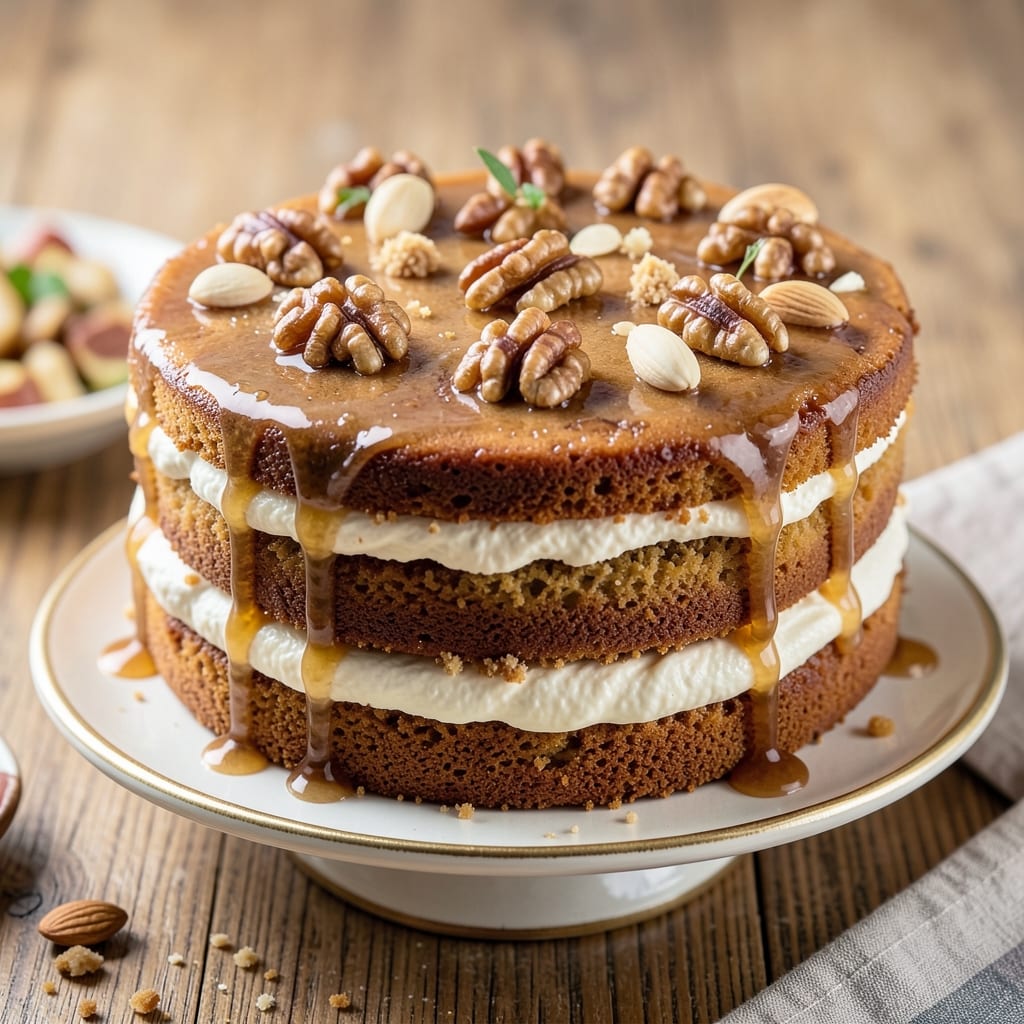
This almond and walnut cake delivers a perfect balance of moist crumb and crunchy texture, with vanilla bean adding depth that makes every slice irresistible. 💛 I developed this recipe after years of testing nut-based cakes, focusing on achieving that ideal harmony between tender layers and satisfying nutty bites—no dry crumbs or overly dense texture here. The secret lies in properly toasting the nuts and using a combination of butter and oil for maximum richness without heaviness.
The recipe begins with a simple yet precise method: toasted almonds and walnuts folded into a vanilla-infused batter, ensuring even distribution of those nutty crunch pockets throughout. Baking at 325°F creates the perfect golden crust while keeping the interior tender, and the vanilla bean extract elevates the flavor from ordinary to extraordinary. What makes this cake truly special is its adaptability—whether you're baking for a celebration or a simple weekend treat, this recipe delivers professional-quality results every time.
By the time you pull it from the oven, you'll have a cake that's rich yet light, with a subtle sweetness that lets the nuts shine. The vanilla bean ties everything together, creating layers of flavor that make each bite memorable. This isn't just another nut cake—it's a showstopper that pairs beautifully with whipped cream, fresh berries, or even a dusting of powdered sugar for an elegant finish.
Perfect for special occasions or everyday indulgence, this almond and walnut cake is designed to impress without requiring advanced baking skills. The instructions are straightforward, and the ingredients are easy to find, making it accessible for home bakers of all levels. Let's get started on creating your own version of this nutty masterpiece.
Ingredients for almond and walnut cake
Toasted nuts, rich butter, and vanilla bean—this cake delivers that perfect crunch and moist crumb you crave.
| Ingredient | Amount | Notes |
|---|---|---|
| All-Purpose Flour 🌾 | 2 ½ cups | Sifted for light texture |
| Unsalted Butter 🧈 | 1 cup | Softened to room temperature |
| Granulated Sugar 🍚 | 1 ½ cups | Superfine preferred for smoothness |
| Light Brown Sugar 🍚 | ½ cup | Packed firmly for moisture |
| Vanilla Bean Extract 🌿 | 2 tsp | Scraped seeds included for depth |
| Large Eggs 🥚 | 4 whole | Room temperature for even mixing |
| Almonds 🥜 | 1 ½ cups | Toasted until golden, chopped |
| Walnuts 🌰 | 1 cup | Toasted until fragrant, chopped |
| Vegetable Oil 🫒 | ½ cup | For extra moisture and richness |
| Baking Powder 🍞 | 2 tsp | Aluminum-free for best rise |
| Salt 🧂 | ½ tsp | Fine sea salt preferred |
| Powdered Sugar 🍚 | ¼ cup | For dusting (optional) |
The nuts are non-negotiable here—raw almonds and walnuts toasted in a dry pan until golden and fragrant. Trader Joe's sells pre-toasted nuts, but I always toast my own for that extra depth. Look for whole nuts (not sliced) so you can chop them yourself—Costco has great bulk bins. The vanilla bean extract? Walmart's Great Value brand is surprisingly good for the price, but if you want to splurge, Madagascar vanilla from specialty stores changes the game. And don't skip scraping the seeds—those little black specks pack serious flavor punch.
No vanilla bean extract? Pure vanilla extract at double the amount works in a pinch, but you'll miss that complex depth. Running low on walnuts? Pecans or hazelnuts can substitute at the same quantity—just toast them first. The butter needs to be softened but not melted (press your finger in—it should leave a slight indent). For the flour, King Arthur is my go-to for reliable baking results. And if you're feeling fancy, swap half the granulated sugar for coconut sugar for a caramel note that pairs beautifully with the nuts.
This cake keeps beautifully—3 days at room temperature wrapped in foil, or 1 week in the fridge. For longer storage, slice and freeze between parchment paper for 3 months. I always make a double batch because it's perfect for gifts—just wrap slices in clear cellophane with a ribbon. The powdered sugar dusting? Only if you're feeling extra fancy, but honestly, the cake's nutty richness stands on its own. Leftovers? Toasted nuts make an amazing crumble topping for yogurt or oatmeal.
Why You'll Love This Recipe
- No Mixer Needed: Mixing the batter is just creaming butter and sugars—no electric mixer required. I’ve made this a dozen times with a wooden spoon while chatting with someone, and it comes out perfectly moist every time.
- Rich Without Fuss: The brown sugar and vanilla bean extract give it that deep, caramelized warmth, while the toasted nuts add crunch. Honestly, the flavor feels like a hug—comforting but not heavy, thanks to the light butter base.
- Weeknight or Guest Day: Slice it warm for breakfast with coffee or save slices for a picnic—it holds up beautifully. Between us, I’ve even used it as a base for a quick dessert trifle when I’m in a rush.
- Budget-Friendly Luxury: You’re using pantry staples here—no specialty items, just good-quality basics. That vanilla bean extract? A little goes a long way, and the nuts add texture without breaking the bank. Leftovers? They disappear faster than you can say “second cup of coffee.”
Step-by-step instructions for almond and walnut cake
This cake delivers perfect texture and nutty depth—here's how to nail it every time.
👨🍳 Step 1: Toast and Chop the Nuts for Maximum Flavor
Preheat your oven to 350°F and spread the 1.5 cups almonds and 1 cup walnuts on a baking sheet. Toast them for 8-10 minutes until they're fragrant and just starting to turn golden. Watch closely—they'll darken quickly! Let them cool for 5 minutes before chopping into ¼-inch pieces with a sharp knife.
Here's the thing—proper toasting enhances their natural oils and flavors. If you skip this, your cake will taste flat. I like to pulse them in a food processor for 3-4 seconds to get even, bite-sized pieces that distribute perfectly throughout the batter.
🍳 Step 2: Cream Butter and Sugars for Light, Airy Texture
In a stand mixer fitted with the paddle attachment, beat the 1 cup softened unsalted butter, 1.5 cups granulated sugar, and 0.5 cup packed light brown sugar on medium speed for 3-4 minutes. You're looking for a light, fluffy mixture that nearly doubles in volume and becomes pale in color. This creaming process incorporates air, which creates that signature tender crumb.
I press down gently on the butter mixture during the first minute—this prevents it from curdling when we add the eggs later. The butter should be completely smooth with no lumps. If it looks too thick, let it sit at room temperature for another 5 minutes before proceeding.
👨🍳 Step 3: Mix Wet Ingredients for Perfect Moisture Balance
Add the 4 room-temperature large eggs one at a time, mixing on low speed for 30 seconds after each addition until fully incorporated. Then stir in the 2 tsp vanilla bean extract and 0.5 cup vegetable oil until smooth. The mixture should be thick but pourable—like a rich custard.
Room-temperature eggs mix more evenly and prevent dense spots in the cake. If your eggs are straight from the fridge, let them sit in warm water for 5 minutes first. This step ensures your cake rises properly and stays moist for days.
🥘 Step 4: Combine Dry Ingredients and Fold in Nuts
In a separate bowl, whisk together the 2.5 cups sifted all-purpose flour, 2 tsp baking powder, and 0.5 tsp salt. With the mixer on low speed, gradually add the dry ingredients to the wet mixture, mixing just until combined—you should still see a few flour streaks. This prevents overmixing which makes cakes tough.
Remove the bowl from the mixer and gently fold in the toasted nuts using a silicone spatula. Be careful not to overmix—just distribute them evenly. The batter will be thick but should hold its shape when spooned. If it looks too stiff, add 1-2 tablespoons of milk to loosen it slightly.
🔥 Step 5: Bake to Golden Perfection and Dust with Magic
Preheat your oven to 350°F and grease two 9-inch round cake pans (or use parchment circles). Divide the batter evenly between the pans and smooth the tops. Bake for 30-35 minutes until a toothpick inserted in the center comes out clean and the edges are golden brown.
Let the cakes cool in the pans for 10 minutes before transferring to a wire rack. While they're still warm, dust the tops generously with the 0.25 cup powdered sugar for that professional finish. The powdered sugar adds sweetness without altering the texture—it's the perfect final touch!
Pro Tips For Making Almond And Walnut Cake
- CREAM THE BUTTER SLOWLY: I used to dump all the butter and sugars in at once, and my mixer would turn into a greasy mess. Instead, add the butter a tablespoon at a time while mixing on medium—this keeps the texture light and prevents a greasy cake. (Yes, even if you're impatient like me.)
- TOAST THE NUTS FIRST: Raw nuts taste bitter and can make the cake dense. Toast the almonds and walnuts in a dry pan over medium heat for 5-7 minutes until fragrant and golden—just until they start to smell nutty. Let them cool completely before folding into the batter, or you’ll end up with a soupy mix.
- DON’T OVERMIX THE BATTER: Once you add the flour, stop mixing as soon as it’s just combined. Overmixing develops gluten, which makes this cake tough instead of tender. Give it 10-12 strokes max—it’ll look slightly lumpy, but that’s the sign of a good texture.
- WEIGH THE FLOUR: Scooping flour from the bag packs it down, adding extra moisture and making the cake dense. Use a kitchen scale and measure the all-purpose flour by weight (usually around 225g for a standard recipe). If you’re stuck with volume, spoon it into the measuring cup and level it off—no packing.
Troubleshooting this dish
Dense or Gummy Texture
If your cake turns out dense or gummy, the issue is likely overmixing or insufficient leavening. First, check your baking powder—it should be fresh (test by mixing with water; it should bubble vigorously). I’ve found that Bob’s Red Mill aluminum-free baking powder is the most reliable. Also, ensure you’re mixing the dry ingredients just until combined—overmixing develops gluten, making the cake tough. If your batter feels too stiff, add 1-2 tablespoons of milk to loosen it slightly before baking. 💡
Cake Didn’t Rise
A cake that didn’t rise properly usually means expired leavening agents or incorrect oven temperature. Double-check your oven calibration—use an oven thermometer to confirm it’s hitting 325°F. Also, make sure your baking powder is aluminum-free (like King Arthur brand) and hasn’t been sitting in your pantry for months. For extra insurance, whisk the dry ingredients vigorously to aerate them before folding into the batter. If all else fails, try adding ½ tsp extra baking powder to the mix.
Dry or Crumbly Cake
Dryness often stems from overbaking or insufficient fat/moisture. First, verify your baking time—pull the cake when a toothpick comes out clean, but not before 30 minutes. If your cake still feels dry, the issue might be too much flour. Weigh your ingredients (flour absorbs moisture differently by volume) or try adding 1 extra tablespoon of vegetable oil or 2 tablespoons of milk to the batter. For extra moisture, brush the warm cake with a simple syrup (equal parts sugar and water, heated until dissolved) before serving.
Nuts Not Distributed Evenly
Uneven nut distribution happens when you don’t fold them gently enough. After mixing the wet and dry ingredients, remove the bowl from the mixer and use a silicone spatula to fold in the nuts by hand. This prevents overmixing while ensuring even distribution. For extra insurance, chop the nuts into ¼-inch pieces (no larger) so they disperse more evenly. If you’re using a food processor, pulse just 3-4 seconds—any longer, and they’ll turn into nut butter! 🌰
Cake Stuck to Pans
Sticking is usually a greasing issue. Always grease your 9-inch round cake pans with butter or oil, then line them with parchment circles for easy release. I also recommend dusting the pans with flour or powdered sugar before adding the batter—this creates a nonstick barrier. If your cake still sticks, try baking on the middle rack (not too high or low) and avoid opening the oven door during the first 20 minutes of baking. For stubborn cases, run a thin knife around the edges before cooling.
Burnt Edges or Pale Center
Hot spots in your oven cause uneven baking. Rotate your pans halfway through baking (after 15-18 minutes) to ensure even heat distribution. If your cake has burnt edges but a pale center, your oven runs hot—lower the temperature to 325°F and add 5-10 minutes to the baking time. For pale centers, tent the cake with foil after 20 minutes to prevent over-browning while the inside finishes cooking. A Thermoworks oven thermometer is worth the investment to avoid these issues.
Nutrition facts
Frequently asked questions
Can I substitute pecans for walnuts in this recipe?
Pecans work beautifully and add a slightly sweeter, buttery flavor. Use the same 1 cup measurement as walnuts, but toast them for 5-7 minutes (they're softer and burn faster). For extra richness, try a 50/50 mix of walnuts and pecans—it gives a perfect balance of crunch and creaminess.
How do I make this cake vegan?
Replace the 4 eggs with 4 tablespoons flaxseed meal + 12 tablespoons water (let sit for 5 minutes to gel). Use vegan butter and swap milk for almond milk if needed. For leavening, add ½ teaspoon apple cider vinegar to the wet ingredients. The texture will be slightly denser but still delicious with the nutty crunch!
Can I bake this in a different pan size?
Yes, but adjust the baking time. For a 9x13-inch pan, bake 25-30 minutes (cover with foil if browning too fast). For 8-inch pans, increase time to 35-40 minutes. Always check with a toothpick—it should come out clean. The key is to maintain the 1.5-inch depth for even baking.
Why does my cake taste bland?
Under-toasted nuts or skipping the vanilla bean seeds are common culprits. Always toast nuts until fragrant and golden, and scrape every bit from the vanilla pod. For extra depth, add ½ teaspoon almond extract or a pinch of cinnamon to the batter. The nuts should be the star—don't skimp on their flavor development!
How should I store leftovers?
Wrap tightly in plastic wrap or aluminum foil and store at room temperature for 3 days. For longer storage, slice and freeze between parchment paper for up to 3 months. Thaw overnight in the fridge—microwaving can make the cake gummy. The powdered sugar topping? Only add it fresh to keep it crisp.